
Vaccination

No matter when beef cross calves are being sold, steps can be taken to make them more marketable.

The animal health industry continues to face challenges of new and emerging diseases as well as improvements in current commercial vaccines. Here are 5 things Mike Roof wants you to know about mRNA vaccines.

While vaccination is widely considered a critical component of cattle health management, could the timing of vaccination impact the efficiency of the product?

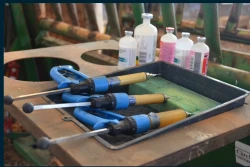
Depending on the size of the animal, viscosity of the product and administration protocols, a variety of needles might be needed. Here’s some guidelines to help decide.

There is a set of minimum requirements for all cattle. However, there is no one-size-fits-all vaccination plan applicable to every farm and ranch.

Medgene has received a USDA license to produce the first Prescription Platform Vaccines for the cattle industry. Specific cattle vaccines available include Influenza D virus, Coronavirus, Rotavirus, and Papillomavirus.

Launching the new Center on Vaccine Evaluation and Alternatives for Antimicrobials, or CVEAA, Kansas State University’s College of Veterinary Medicine aims to support animal vaccine development and usage.

According to Iowa State University’s David Verhoeven, vaccines using mRNA technology have been shown to reduce disease on farms, and it’s all but impossible for them to end up in your food.

We can’t control everything on a cattle operation. But we can make a battle plan to protect calves from bovine respiratory disease long before we ever reach for antibiotics.
Misinformation and conspiracy theories regarding the use of mRNA vaccines in livestock continue, despite efforts of the scientific community, who emphasize, “mRNA from a vaccine will NOT be passed along in meat.”

Household units and mini fridges are often unsuitable for maintaining veterinary products, according to a recent study by Emmanuel Rollin, DVM, College of Veterinary Medicine at the University of Georgia.

The vaccine contains killed whole-cell Paenibacillus larvae bacteria and is expected to reach the marketplace on a limited basis this year.

Just because we have easy access to the thousands of beef-on-dairy cross calves eventually headed for feedyards doesn’t mean we should be vaccinating them every week, according to Dan Thomson.

United Animal Health, Johnsonville Ventures and the Iowa Corn Growers Association commit support to Genvax Technologies, a startup dedicated to advancing self-amplifying mRNA vaccine production in animal health.

Researchers have looked at the immune response of young calves to vaccination, but little data exists on the physical or physiological effects of vaccination in very young calves. Results from a new study could help.
Vaccination plans are only one pillar in an effective herd health program and should be viewed as a mechanism to minimize risk of disease.

The 32-page document can help veterinarians counsel beef and dairy clients on vaccination strategies. Included are vaccine label information, categories, core vaccines, storage and handling recommendations and more.

If a vaccine isn’t preventing disease, perhaps the money would be better spent on adding real value to calves.
If a vaccine isn’t preventing disease, perhaps the money would be better spent on adding real value to calves.

It’s an old and frustrating disease that is not easily controlled. But Johne’s disease may soon be tamed by a new vaccine under development.

A basic understanding of why core-antigen vaccines are an effective tool during the dry period can help clear up common myths surrounding their usage.

Elanco recently completed a randomized clinical trial to evaluate changes in milk production following vaccination of lactating dairy cows for M. haemolytica.

Vaccination will play an important role in addressing the pandemic.
A proactive, preventative approach to pinkeye using custom-made vaccines may help minimize outbreaks and reduce the number of cattle needing antibiotic treatment.

To better understand why calves are still getting sick, a leading animal health marketing research firm completed a survey capturing the deviation level outside of vaccine label requirements.

The USDA’s Animal and Plant Health Inspection Service (APHIS) is announcing initial plans to carry out new animal health activities using resources provided by the 2018 Farm Bill.

For years, the USDA has used a “tiered” system for claims on vaccine labels, which added complexity to pre-license trials and tended to create confusion for users.

Huvepharma releases a conditional licensed vaccine for the prevention of pinkeye caused by Moraxella bovoculi in cattle.

The Center for Food Security and Public Health at the Iowa State University College of Veterinary Medicine has launched updated versions of two of its online veterinary immunology and principles of vaccinology courses.

USDA’s Animal and Plant Health Inspection Service (APHIS) recently issued a final rule requiring reporting of all adverse events associated with veterinary biological products.