
Education

The rumen may be taking center stage in digesting another global challenge: plastics

Early mastitis detection is often the key to reducing the impact of the disease in a dairy herd. There are a number of technologies to help address the issue.

With the average frost date upon us, prussic acid will be (or already is) an issue in certain forages. Prussic acid is found when susceptible plants are under drought conditions or after a light frost.

Reproductive efficiency is highly correlated to nutrition. The target Body Condition Score going into calving season is 5.5 for the mature cow and 6 for first calf heifers.

Many cattle owners wonder how to determine if and when an animal needs veterinary attention. These are some guidelines you might want to consider passing along to your clients for consideration.

Over-conditioned cows that lose weight after calving subsequently have lower fertility, produce fewer quality embryos and face higher rates of health problems.

When the mercury drops, preweaned calves expend more energy to maintain their body temperature. They often need added nutrients to keep them healthy and growing through frigid conditions.

Do you ever wonder how some people seem to fall into a pile of cow manure and come out smelling like a rose? Those successful types probably have a high level of grit and a lot more perseverance than meets the eye.

If you or an employee treats an animal with a drug, it’s important to keep adequate and updated treatment records.

To identify unique proteins that can be used for interventions against BRD, scientists took a closer look at the genetic material of multiple strains of three groups of bacteria commonly implicated with the disease.

Come for work and stay to play! Check out the agenda and make plans now. Use the code MILK50 to save $50 off the registration fee.

If a way could be devised to shut down immune system activation, and thus reduce the detrimental effects of inflammation at its root cause, cows in transition may remain healthier.

There are three common “physical therapy” type scenarios bovine veterinarians deal with that contribute to injury, discomfort or pain. With each scenario, check out the body mechanics that can reduce those problems.

When properly motivated, a new associate can help the practice break existing negative behaviors in the business, improve diversity, and help with the resetting of medical and management SOPs.

Addressing mental health is a significant challenge in rural America due to unique barriers. Rural Minds™ provides education and resources to confront the stigma of mental illness.

Texas Tech researchers have received a grant to examine if thermography can help minimize the use of antimicrobials in cattle through targeted metaphylaxis.

Dr. Alison Van Eenennaam, Professor at the University of California, Davis, gave a presentation, “Gene Editing Today and in the Future” during the Beef Improvement Federation Symposium June 24 in Des Moines, Iowa.

AABP leaders and Dr. Carrie Jurney, president of Not One More Vet, shared insights and recommendations at the annual conference to help and encourage veterinarians struggling and contemplating leaving the profession.

The pandemic and the shortage of food animal veterinarians have catapulted the concept of telemedicine forward. As ASF inches closer to the U.S., experts say telemedicine could become even more useful. Here’s why.

While every dairy farmer has a unique affection for their dairy calves, the next great generation of his or her milking herd, it’s not a good idea to kiss them or allow farm visitors to smooch away.

Merck Animal Health has awarded $90,000 in scholarships to 18 bovine veterinary students based on their academic achievements, career goals, work experience and interest in veterinary medicine.

Growing the ideal heifer is an ever-changing goal. A research team from Penn State University and the University of Florida recently explored the impact of bodyweight at first calving on milk yield and herd longevity.

The addition of any new animal creates the potential to introduce disease into the resident herd. Work with your clients to develop a protocol to help prevent this.

Weaning is time to focus time and management on ways to eliminate stress, maintain health and maximize the value of weaned calves, but also a critical time to manage the cow herd.

Mentoring by experienced practitioners provides a framework for success by helping young veterinarians practice better medicine, develop relationships with clients and deal with hardships inherent in the business.
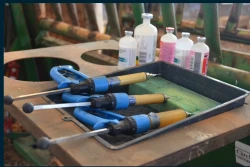
To maintain efficacy, keep vaccination bottles at between 35 and 45 degrees Fahrenheit and out of UV light, says Gregg Hanzlicek, director of the Production Animal Field Investigations at Kansas State University.

Experienced practitioners sometimes consider hiring new graduates less than ideal. But this is exactly what experienced vets need to do if they want to keep their practice healthy and growing.

Every business leader needs at least two mentors, according to Jon Acuff, an entrepreneur, speaker and author of five best-selling books.
Advanced Animal Diagnostics’ QScout® BLD is a rapid, on-farm diagnostics tool providing livestock producers with the information they need to make informed management and treatment decisions.

Want to keep disease out of your calf barn? If so, it might be prudent to take a page from the biosecurity measures of our pig-and-poultry-raising kin, and set up a “Danish entry.”