
Medical technology


The company also is celebrating 30 years of working to advance herd health.

The event is slated for July 22-24 in Rochester, N.Y., with an agenda focused on the theme of “Clearing Hurdles to Improve Milk Quality.”

Researchers are using gene editing techniques to introduce beneficial traits like polled and disease resistance, as well as exploring innovative approaches like surrogate sires.
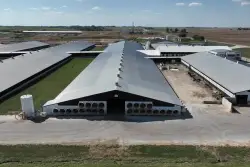
A decade into the partnership, GenoSource has grown into more than the original partners ever imagined. The dairy now involves eight families, who all love Holsteins and share a goal of creating a more sustainable future for the next generation.

A recent study at Kansas State University highlights some of the benefits.
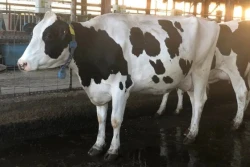
Activity and rumination monitoring systems -- precision cow monitoring -- can revolutionize the way a dairy manages its cows. Or they can pile up frustrations and create greater expense without adding value.
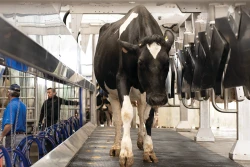
Three producers open up and share about their journey of innovation and technology as a way to spell longevity to their dairy operations.

Researchers explore interactive effects of guy microbiomes, fatty acids and muscle to promote better health.
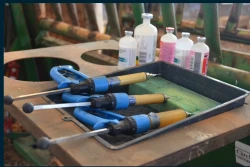
As misinformation regarding the use of mRNA vaccines in livestock filter through social media, there are facts begging to be set straight.

In the process, the upgrade is designed to give veterinary professionals the most secure and seamless platform experience possible.

CRISPR technology has many potential applications that facilitate sustainability, animal welfare and efficiency for the beef industry.
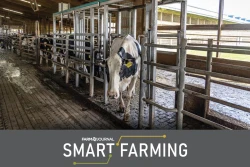
Once a technology becomes a boring experience it means it has become proven, well-adopted, and easy to utilize. There are three “boring” technologies silently shaping the industry.
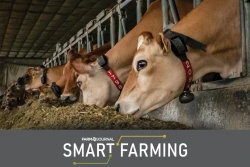
By integrating complex biosensors technology onto our farms, we are now capable of knowing more about our cows’ bodies than ever before.

Iowa State University’s Veterinary Diagnostic Laboratory (VDL) is set to revolutionize molecular diagnostic testing with the introduction of a cutting-edge machine—the “SmartChip.”

The goal of the program is to create impactful and innovative outreach tools. This will better enable livestock veterinarians to recognize and address toxicology problems in food animal species.

“ACTPs have the potential to make significant changes in how we treat diseases and may provide novel therapies for unmet therapeutic needs of animals,” reports Dr. Janet Woodcock, Acting Commissioner of the FDA.

More affordable technology, including data analysis programs, calf scales and pasteurizers, are being utilized in raising calves and heifers.

If you’re looking to improve upon your assessments, treat semen evaluation as a diagnostic tool, then look at management, environment, and genetics to help improve overall bull, herd, and industry cattle fertility.

New technology in temperature detection and logging provide veterinarians an opportunity to establish consulting programs around thermal audits of their producers’ operations as well as improve animal care.

The Illinois Board of Higher Education this month approved a new undergraduate degree combining computer sciences and animal sciences at the University of Illinois.
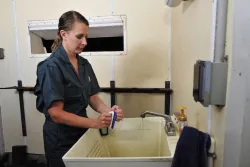
Putting biosecurity protocols in place can help reduce the risk of disease being transferred to not only livestock, but to humans as well.

Researchers have developed a chemical method — host and pathogen temporal interaction profiling, or HAPTIP — for labeling a living bacteria and tracking it as it invades a host cell.

Specific gravity test could help ensure embryo viability.

Season 4 of The IDEA Competition is now accepting applications from veterinary student innovators through July 15th, 2019 with an opportunity to win a share of $17,500 in prize money.

This webinar is rescheduled from the original date of December 3, 2018.

The new CAST paper outlines the need for better data sharing and accessibility to enable creative and efficient application of research results.