
Milk - General

It might not happen today, tomorrow or next week, but artificial intelligence (AI) will soon become an integral operational tool on many U.S. dairy farms, according to Miel Hostens with Cornell University.

The Budweiser plant in Columbus, Ohio, has an additional demographic — 600 Holstein cows

To better understand this fatal intestinal disease that could be impacting your herd, don’t make assumptions. Learn what the true cause is behind the death of any cow and then manage the symptoms from there.

Economics suggest producers will keep cull rates low.

Training deficiencies consistently rank among the top program corrective actions within industry evaluations. That’s why a team of veterinarians created DairyKind: an online platform that delivers on-demand training accessible in the native language of the employee.

With fewer young professionals entering large animal medicine, the University of Vermont’s CREAM Program offers a unique, hands-on approach to preparing the next generation of dairy veterinarians through real-world experience.

The ebb and flow of market factors require dairies to be nimble in their management strategies. Situation currently at hand: not enough heifers to meet typical demand. That’s why Wisconsin veterinarian Ryan Leiterman advises dairies to embrace their older cows.

Katie Dotterer’s passion for dairy and Spanish has evolved into a significant mission —bridging communication gaps within the agricultural sector.

In the heart of central California, Lumar Dairy stands as a dynamic example of how commitment to heritage and openness to change can coexist and thrive.

The careful execution of calf management protocols and daily tasks that keep calves healthy can and should incrementally add up to more milk produced on the dairy, according to consulting veterinarian Scott Earnest.

Rising heat and humidity can drive up SCC, but with proactive management and attention to detail, summer doesn’t have to compromise milk quality.

The Senate Agriculture Committee has advanced the bipartisan Whole Milk for Healthy Kids Act, a major step toward restoring whole and 2% milk options in schools.

Navigating the world of health insurance can be daunting, especially for farmers and small business owners. Here’s an explanation of several options that might work for you.

GLP-1 weight-loss drugs are reshaping dairy demand by curbing cravings for processed, fatty, and sugary products, fueling a rise in protein-rich, low-fat options.

A sneak peak of Farm Journal’s leading-edge survey insights illustrates strategic solutions that generate renewed confidence, ensuring a promising path forward for the industry.

Adopt these strategies, and watch your interactions flourish into meaningful and impactful exchanges.

More colostrum would be welcome on virtually every dairy farm, especially if it also had higher quality. A team of Cornell University researchers explored whether a dose of oxytocin could help fresh cows deliver either, or both.

Can pasteurized whole milk be enhanced with added milk replacer powder? If so, is it possible to add too much of a good thing?

What happens inside a cow’s udder when nutrition takes a hit? A new study reveals how quickly the mammary gland adapts—and what it means for milk production.

With dairy replacements in tight supply and beef-on-dairy calves worth a small fortune, monitoring the health and management of livestock is just as crucial as keeping a close eye on financials.
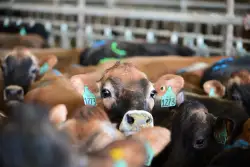
The U.S. dairy industry, driven by substantial investments and shifting consumer preferences, is poised for significant growth in the coming years.

Zonneveld Dairies, Inc., a 10,000-cow dairy operation in California provides valuable insights from their experience navigating HPAI.

Soon after the discovery of highly pathogenic avian influenza (HPAI) strain H5N1 in dairy cattle, scientists learned that milk was a primary vector in spreading the disease from cow to cow.

Last week, the U.S. dollar had the worst week-to-week performance since 1995 and that, combined with global dairy price premiums, should spark some export interest and support domestic prices.

From the moment a calf is born, its journey to becoming a productive member of the herd begins.

There’s a new, first-of-its-kind, dairy product hitting store shelves this year. And it’s sure to resonate with consumers who are calorie-conscious.

While Lindsey Worden has remained with one employer since college, her passion for dairy could “easily fill a barn.” She illustrates that with a readiness to embrace change and seize opportunities, tremendous achievements are attainable. Her leadership at the Holstein Association is paving the way for innovations benefiting producers and the industry for years to come.

The dairy cattle market is currently experiencing an unprecedented surge in demand, creating a bustling atmosphere in the industry. As the competition heats up, market players are closely observing what is currently trending – is it beef-on-dairy calves or the traditional dairy replacements and fresh cows?

In the world of dairy farming, maximizing milk quality and cow comfort is paramount. Dr. Andy Johnson, famously known as ‘The Udder Doctor,’ has been at the forefront of this mission. With experience ranging from small farms with 20 cows to large-scale operations with 22,000 cows, Dr. Johnson’s insights have reached dairies across 30 countries and 47 states.
U.S. dairy cattle tested positive for a strain of bird flu that previously had not been seen in cows, the U.S. Department of Agriculture said on Wednesday, ramping up concerns about the persistent spread of the virus.