
Biosecurity

Purdue University, Indiana University and the University of Notre Dame have joined the Midwest Center of Excellence for Vector-Borne Diseases. One of the labs will target Culex mosquitoes, carriers of West Nile virus.

Probiotics may not be as beneficial for animal and human health as people think, according to recently published research at Kansas State University. Here’s why.

Highly pathogenic avian influenza has now been confirmed in Iowa, Kansas and Illinois.

USDA’s Animal and Plant Health Inspection Service has confirmed the presence of highly pathogenic avian influenza in a flock of commercial broiler chickens in Stoddard County, Mo.

It’s no surprise pork products made the U.S. CBP’s Top 10 Agriculture Seizures of 2021 list more than once. Protecting animal ag is a high priority, especially as deadly swine viruses like ASF move closer to the U.S.

USDA’s Animal and Plant Health Inspection Service is awarding more than $16.3 million to 64 projects with states, universities and other partners to strengthen programs to protect animal health.

The goal of the program is to create impactful and innovative outreach tools. This will better enable livestock veterinarians to recognize and address toxicology problems in food animal species.

The pandemic and the shortage of food animal veterinarians have catapulted the concept of telemedicine forward. As ASF inches closer to the U.S., experts say telemedicine could become even more useful. Here’s why.

A new African swine fever vaccine candidate has been shown to prevent and effectively protect both European and Asian bred swine against the current circulating Asian strain of the virus.

The time you are most at risk for something is when you don’t know it’s a risk, says Patrick Webb, National Pork Board acting chief veterinarian. That’s why a new study to identify biosecurity gaps is causing a stir.

Although there’s no licensed commercial vaccine for African swine fever available, experts say they are encouraged by the progress that’s been made in the last few years. Here’s why.

While there are lots of reasons to believe ASF in the Dominican Republic is not a sure sign it will penetrate the U.S. industry, still, everyone has become focused on it and how slippery it is to contain.

The number of dogs being imported into the U.S. for resale from countries affected by ASF is growing. Combine that with an increasing risk of foreign animal disease spread, and it’s a formula for potential disaster.

The Pirbright Institute is tackling three deadly livestock viruses: porcine reproductive and respiratory syndrome virus and African swine fever virus in pigs and bovine respiratory syncytial virus in cattle.
Each year, several thousand dogs enter the U.S. for resale or adoption. In a recent Hogs on the Hill article, NPPC chief veterinarian Liz Wagstrom wrote that it’s time to sound the alarm on importing rescue dogs.

FADs are a constant threat to the livestock industry. The country is more tuned in to this struggle than ever before with the recent COVID-19 pandemic. National Pork Board’s Dave Pyburn and NCBA’s Ethan Lane discuss why.

If the COVID-19 pandemic has taught the country anything, it’s that there is a tremendous amount of synergy between the circumstances of a pandemic involving humans and those involving animals.
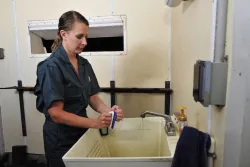
Putting biosecurity protocols in place can help reduce the risk of disease being transferred to not only livestock, but to humans as well.