
Dairy - General

Less than 5% of new grads choose rural food animal practice. That needs to change to protect the U.S. food supply and public health. Contacting legislators is one way farmers and ranchers can weigh in and help.

As misinformation regarding the use of mRNA vaccines in livestock filter through social media, there are facts begging to be set straight.

Queen Elizabeth II, the UK’s longest-serving monarch, recently passed away at the age of 96. The late queen, who was well-known for her soft spot for animals, had a herd of 200 registered Jersey cows.

Three U.S. schools are included in the list.

If you are experiencing a shortage in your straw supply, here are six bedding alternatives to consider.

Bloody scours in calves is never a welcome sight, but diagnosing the source can help with treatment and prevent future cases.

Maximizing pleasure and satisfaction in dairy calves isn’t required. But it does make them happier, and helps the dairy industry share a positive picture with the consuming public, according to University of Wisconsin animal behavior researcher Dr. Jennifer Van Os.

Beef-on-dairy breeding has revolutionized the U.S. cattle industry, shored up dwindling fed-beef cattle supplies, and added considerable black ink to the bottom lines of dairies in recent years. But is it a phenomenon gone too far?

Beef and dairy producers throughout Idaho may soon be receiving steamflaked corn and calf grains from a newly expanded feed facility in the state.

Silage samples with high ammonia (or soluble protein) consistently contain lower amino acid levels. Could subpar silage fermentation be causing this?

Cows that milk the same amount or more, while eating less feed than their counterparts, are both desirable and profitable. So, is there a way to “make” such cows?

Remembering Greg Henderson

The USDA said it will expand bird-flu testing of beef entering the food supply as part of its response to the ongoing outbreak among dairy cattle, adding that U.S. beef and dairy products remain safe to consume.

While there are a myriad of factors affecting profitability on a dairy farm, the transition period continues to stand out as the most critical phase.

A once infamous Oregon ‘mega-dairy’ site has embarked on a new journey, signaling a shift away from its controversial past.

The runaway dairy heifer and calf markets of 2024 have cooled a bit at summer’s end.

As we near 200-herds being impacted by highly pathogenic avian influenza (HPAI), the USDA says work is moving forward on a vaccine.

With beef-on-dairy calf prices through the roof, making the right beef semen selection has the potential to push those sky-high prices even higher.
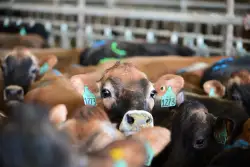
The latest USDA Milk Production Report reveals the true impact HPAI has had on dairies.

The Farmers Assuring Responsible Management (FARM) Program has released an updated version of its Animal Care standards.

Among the mix of technologies, management factors, and strategies to raise healthy calves: genetics. There is growing evidence that calves can inherit the ability to resist calfhood diseases like pneumonia and scours from their parents.

Water scarcity is one of the most significant challenges facing the dairy industry, particularly in Texas where the cow population has more than doubled over the past two decades.

Beef “recip” cows are extremely expensive to purchase. Could renting dairy uteruses be an avenue for beef producers to explore?

A new approach to automated milking is gaining traction in the industry – robotic batch-style milking.

What is the world’s most expensive dairy disease? And what countries are hit hardest by these costs?

Holstein springers tread into $3,000 per head territory again this month, roughly double year-ago values.

Fewer cows went to their local sale barns in the month of June compared to months prior.

Results from Farm Journal’s state of the industry report spells significant growth.

Rumen-protected choline has been shown to produce a host of benefits for transition cows, from improved liver function to better immunity and higher milk production. New research shows it can help build better calves, too.

Scott Brown, a professor at the University of Missouri, shares what he’s seeing in the beef, pork and dairy sectors