
Dairy Biosecurity

The agency will provide reimbursement for testing at an approved National Animal Health Laboratory Network laboratory.

The livestock industry needs a comprehensive, cohesive plan to address the virus. Producers, their employees and veterinarians need clear answers and support from U.S. agricultural leadership, moving forward.

APHIS announced it has shared 239 genetic sequences of the H5N1 avian flu virus which will help scientists look for new clues about the spread of the virus.

South Dakota Dairy Producers encourages all dairy producers to closely monitor their herd and contact their herd veterinarian immediately if cattle appear symptomatic.

Steve Troxle, state commissioner of agriculture, said he is waiting for more diagnostic information from the National Veterinary Services Laboratory and will work collaboratively with North Carolina dairy farmers.

The American Association of Bovine Practitioners is making the name change, as it more accurately reflects the issue.

Bacteria, viruses, and protozoa all have crafty methods of making preweaned calves sick. Veterinarian Don Sockett shares his advice on fighting these organisms through effective cleaning and sanitation routines.

Kay Russo, DVM, Novonesis technical services manager for dairy and poultry, emphasized the situation is rapidly evolving and more clarity will come with time as researchers learn more.

Ohio has become the sixth state where dairy cattle have tested positive for highly pathogenic avian influenza (HPAI), also known as bird flu.

Mexico will increase surveillance and reinforce inspections of U.S. livestock imports after bird flu was found in dairy cattle.

Livestock producers and veterinarians are urged to practice good biosecurity practices to prevent transmission of the disease. Five states have also issued restrictions on dairy cattle movement.

The livestock industry continues to grapple with the first confirmed cases of HPAI in cattle, while federal and state agencies continue to assure consumers there’s no concern about the safety of the U.S. milk supply.
USDA says genetic sequencing revealed the mystery illness impacting Texas dairies is the same strain of Highly Pathogenic Avian Influenza (HPAI) that’s been in the U.S. The virus is carried by wild waterfowl.

A new collaborative effort is helping fund rapid investigations of unexplained morbidity or mortality events in animals – unexpected deaths or illnesses that could signal emerging animal disease threats.

USDA researchers have engineered sustainable machine-washable antimicrobial wipes that can be used at least 30 times for cleaning hard and nonporous surfaces.

Art Schaap, owner of Highland Dairy in Clovis, New Mexico, has been living a nightmare for the past four years. His nightmare is finally coming to an end, but not without the heartache of euthanizing 3,665 cows.

Australian authorities said this week they have detected “viral fragments” of foot and mouth disease on a small number of products entering the country from Indonesia and China.

The addition of any new animal creates the potential to introduce disease into the resident herd. Work with your clients to develop a protocol to help prevent this.

Each year, several thousand dogs enter the U.S. for resale or adoption. In a recent Hogs on the Hill article, NPPC chief veterinarian Liz Wagstrom wrote that it’s time to sound the alarm on importing rescue dogs.

Genetic sequencing allows for the identification of the specific DNA footprint of a disease, which will allow for improved disease surveillance when illness is detected in a herd.
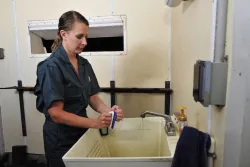
Putting biosecurity protocols in place can help reduce the risk of disease being transferred to not only livestock, but to humans as well.