
Veterinary - General

The 2025 event, slated for Sept. 11-13 in Omaha, Neb., will challenge and encourage attendees to further develop the knowledge and services they offer food animal producers. Early registration is open.

Losses range between $15 and $88 per head, conservatively, a result of reduced herd productivity, health and reproductive efficiency.

The tiny, annoying pest can wreak $6 billion in losses annually to U.S. cattle production due to decreased weight gain or milk production, veterinary needs and control measures.

Well-designed, versatile and practical cattle working facilities reduce stress on cattle and producers.

Mexico has committed to eliminate restrictions on USDA aircraft and waive customs duties on eradication equipment aiding in the response to the spread of New World Screwworm (NWS).

Cattle producers have been successful applying selection pressure to maintain calving ease while improving the additive genetic merit for weaning and yearling weight performance.

The move could improve the outlook for beef exports to China, which has upped its spending on Australian beef during the past two months.

It is important that dairy industry stakeholders work together to further understand the complexity and underlying mechanisms of heat stress impacts and develop alternative strategies to mitigate the risks.

Researchers continue to seek methods of monitoring animal health and welfare to anticipate health setbacks and improve the animals’ lives. The latest tool to do so: saliva.

K-State Entomologist Cassandra Olds shares strategies for good fly control.

With a strategic approach to magnesium supplementation and maintaining close observation of the herd, producers can effectively mitigate the risk of grass tetany.

Authorities say it cannot be ruled out at this time that the virus was not of natural origin, and the country may be dealing with an artificially engineered virus.

President Trump has announced a series of tariffs, scheduled to roll out over the next few days, on some of agriculture’s most significant trade partners. The outcomes could be a net positive for cattlemen, some beef industry members say.

Could a cow’s birth season impact its longevity and productivity? University of Florida researchers say yes—discover how heat stress at birth could shape a cow’s future.

Leadership and administrative staff at the Center for Veterinary Medicine were among about 140 staff members fired on Tuesday as part of a larger “reduction in force” in the 700-person agency.

Steps to identify and manage the right-sized cow for the operation.

Keep unwanted visitors out by buttoning up your biosecurity measures to prevent the introduction and spread of infectious diseases and pathogens.
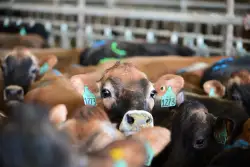
The U.S. dairy industry, driven by substantial investments and shifting consumer preferences, is poised for significant growth in the coming years.

The March Ag Economists’ Monthly Monitor asked economists if they think the U.S. general economy will see a recession in 2025. 62% said yes.

When a virus moves into a new geographical range or is reintroduced into a country that has maintained a negative status for a long period, SHIC’s Megan Niederwerder says it’s critical to reassess the risk to the U.S.

With beef-on-dairy calves in high demand, giving them the best start is essential for both their health and market value. Dr. Gail Carpenter outlines five key priorities for dairy farmers to focus on to help set these calves up for success.

The retail meat industry sold 500 million more packages in 2024 than they did in 2023. Of that 500 million-package growth, 62% was driven by millennials.

Even mild cases can impact milk production, health and well-being. Researchers, citing expenses and losses farmers incur from the problem, say costs per case commonly range from $76, on the low end, to more than $336, on average.

Undergraduate students and current high school seniors who have experience raising and caring for small or large livestock, equine and/or poultry are eligible to apply for a $5,000 scholarship to help them on their educational journey toward a career focused on livestock production and animal stewardship.

The U.S. bovine semen industry’s resurgence in 2024 signifies more than just a recovery. It represents a transformative wave of growth that is poised to impact livestock reproduction on a global scale.

ENSO-neutral means conditions could be close to average, but Eric Snodgrass, Nutrien’s principal atmospheric scientist, says that doesn’t mean the weather will be normal this spring and summer with growing concerns about drought.

Researchers are using gene editing techniques to introduce beneficial traits like polled and disease resistance, as well as exploring innovative approaches like surrogate sires.

Calculate a bull’s value proposition and consider how he can meet a herd’s needs and goals before purchasing.

One of the easiest and most effective biosecurity practices to adopt is having separate footwear and clothing for wearing on and off the farm or ranch. Check out the other five ideas our industry experts recommend.

Changes in BCS at dry-off and parturition have been associated with differences in health, performance, and survival.