
Animal Welfare

In a marketplace filled with competing messages and general mistrust among consumers, it is encouraging to see high levels of trust by consumers in those individuals with hands-on experience with the animals, namely the veterinarian and the producer.

NCBA’s Woodall says the goal is complete eradication — not just from the U.S., but from Mexico and Central America, ultimately pushing the fly back to its original range in South America.

Strategies for evaluating herd performance following calving.

The tiny, annoying pest can wreak $6 billion in losses annually to U.S. cattle production due to decreased weight gain or milk production, veterinary needs and control measures.

Implementing low-stress handling techniques while working cattle can save producers time, money, injury and headaches.

It is important that dairy industry stakeholders work together to further understand the complexity and underlying mechanisms of heat stress impacts and develop alternative strategies to mitigate the risks.

With heifer prices at record highs, raising replacements on-farm can be a money saver since 2024 costs are much lower than buying on the market.
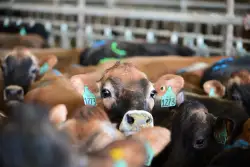
The U.S. dairy industry, driven by substantial investments and shifting consumer preferences, is poised for significant growth in the coming years.

When a virus moves into a new geographical range or is reintroduced into a country that has maintained a negative status for a long period, SHIC’s Megan Niederwerder says it’s critical to reassess the risk to the U.S.

USDA Secretary Brooke Rollins says the agency is hyper-focused on poultry, but no vaccine is yet available. The agency has ‘separate work streams’ to address the virus in the ‘cattle and dairy’ industries, but dairy is not part of USDA’s primary focus for now.

Soon after the discovery of highly pathogenic avian influenza (HPAI) strain H5N1 in dairy cattle, scientists learned that milk was a primary vector in spreading the disease from cow to cow.

ENSO-neutral means conditions could be close to average, but Eric Snodgrass, Nutrien’s principal atmospheric scientist, says that doesn’t mean the weather will be normal this spring and summer with growing concerns about drought.

One of the easiest and most effective biosecurity practices to adopt is having separate footwear and clothing for wearing on and off the farm or ranch. Check out the other five ideas our industry experts recommend.

Specific lots may contain elevated or deficient levels of nutrients which may be harmful to cattle, the company says.

What is normal for calf body temperature, and when should they be treated for fevers? Industry experts weigh in on making temperature monitoring a routine part of daily calf care.

Much of the West, Southwest and upper Midwest could use more moisture. Beef and dairy producers and their veterinarians might want to do some contingency planning for what’s shaping up to be a dry spring.

Learning why and how some calves navigate life challenges better than others can provide clues into how to support individual animals to achieve better welfare and performance, particularly with the aid of precision livestock technologies.

In the world of dairy farming, maximizing milk quality and cow comfort is paramount. Dr. Andy Johnson, famously known as ‘The Udder Doctor,’ has been at the forefront of this mission. With experience ranging from small farms with 20 cows to large-scale operations with 22,000 cows, Dr. Johnson’s insights have reached dairies across 30 countries and 47 states.

Outgoing USDA Secretary Tom Vilsack sent a letter to Mexico’s Secretary of Agriculture acknowledging the progress made in reopening cattle trade between the two countries following the detection of New World Screwworm, but says more action is needed to resume trade.

The increased use of aspirin (acetylsalicylic acid) to treat pyrexia and pain in dairy cattle infected with highly pathogenic avian influenza (HPAI) H5N1 prompted FDA to issue a warning to producers and veterinarians in October.

The report echoes calls by other scientists to ramp up the surveillance of felines, which are susceptible to the virus and have a high mortality rate. The AVMA says several cases in cats linked to poultry or wild bird exposure had been reported before the outbreak began in dairy cows last spring.

The pest can travel on humans, vehicles, pets, livestock and even on some wildlife species — all of which increase the likelihood it could eventually enter our country.

Any existing herd health problems are amplified by HPAI H5N1, practitioners report. Some are asking regulatory agencies for more consistent testing and reporting protocols. They are also encouraging producers to invest dollars in better nutrition and cow comfort resources.

Scientists are ringing bells of warning about this virus, telling us to take action now. I hope we’re listening.

Strategically planning a dairy cow’s transition out of the herd can maximize meat quality, carcass yield, and overall profitability.

The annual award, sponsored by Zoetis, recognizes outstanding achievements by a veterinarian in beef-cattle medicine.

The Nov. 22 closing of the southern border to cattle imports from Mexico due to detection of New World Screwworm in a cow brings up questions regarding the history and future of trade with the country.

While financial well-being is a function of the market, it is also a function of the availability of grass for grazing cattle. Both define the cattle cycle. Furthermore, grazing is critical for rangeland health.

If you’re having a bad day, your cows probably know it.

USDA announced on Oct. 30 the first reported case of H5N1 in a pig in an Oregon backyard farm.