
Education

From the moment a calf is born, its journey to becoming a productive member of the herd begins.

Alltech released the 2024 U.S. Harvest Analysis which highlights the rising mycotoxin risks and strategies for proactive management.

Sponsored
Successfully managing the transition period is vital for dairy cow productivity.

What is normal for calf body temperature, and when should they be treated for fevers? Industry experts weigh in on making temperature monitoring a routine part of daily calf care.

Have you ever wanted to post on social media but were worried about potential backlash? Knowing how to handle contentious issues online can help people understand the animal agriculture’s commitment to animal care.

What do high-quality leaders have in common when it comes to developing both strong teams and strong balance sheets?

K-State beef systems specialist researching the effects on stocker cattle performance.

Five strategies when feeding less than ideal hay.

Learning why and how some calves navigate life challenges better than others can provide clues into how to support individual animals to achieve better welfare and performance, particularly with the aid of precision livestock technologies.

The case broadens the U.S. outbreak of the virus that has infected nearly 70 people, mostly farm workers, since April.

In the world of dairy farming, maximizing milk quality and cow comfort is paramount. Dr. Andy Johnson, famously known as ‘The Udder Doctor,’ has been at the forefront of this mission. With experience ranging from small farms with 20 cows to large-scale operations with 22,000 cows, Dr. Johnson’s insights have reached dairies across 30 countries and 47 states.

Veterinarians and veterinary technicians may earn one Registry of Approved Continuing Education (RACE) credit for attending this DCHA webinar.

Calving during the winter months can present some unique challenges, so being prepared with supplies and supplemental nutrition will help.

Under the regulation, FSIS would classify certain Salmonella levels and serotypes in raw poultry products as adulterants and, therefore, prohibit them from entering the food supply.

Cold, snow, wind, and more – winter in the northern climates brings extra challenges for dairies and their animals.

While some operations are increasing cow numbers, there are a couple segments decreasing numbers or exiting for good.

Topics include genetic modifications in livestock, yield grades and a beef industry economic outlook.

Monitoring heifer growth, and making management decisions based upon it, is proving to be an increasingly important practice to strike the delicate balance between economizing heifer development and breeding them at the correct stage to maximize their performance as mature cows.

Research shows feeding frequency has less impact on preweaned dairy calves’ performance than the total nutrients provided, despite logic suggesting more frequent feedings would help.

One recipient is a dual-degree veterinary student at the University of Minnesota, pursuing both a doctorate in veterinary medicine and a doctorate in population medicine.

While rare in most cowherds, retained placentas jeopardize reproductive efficiency and can rob operations of profit potential.
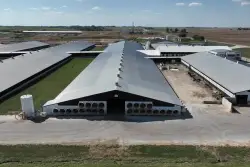
A decade into the partnership, GenoSource has grown into more than the original partners ever imagined. The dairy now involves eight families, who all love Holsteins and share a goal of creating a more sustainable future for the next generation.

When dairy farmers think about animals impacted by cold stress, calves are often the first that come to mind. However, it’s important to remember that cold stress doesn’t just affect calves—it can also significantly impact heifers.

Veterinarian Kirk Ramsey discusses ways to to prepare first-calf heifers to breed back.

The performance of growing calves on wheat pasture can by increased by providing a small amount of a concentrate supplement carrying an ionophore and minerals that are deficient in wheat pasture.

While the use of bells when Bevin Bells was founded in 1832 is much different today, the sixth-generation company continues to spread Christmas cheer year-round.

At just 11 years old, Reed Marcum had an idea for a project: Collect toys and give them to children in his community. Eight years later, the toy drive has given away more than 64,000 toys at an annual event people wait in line for hours to attend.

Brian Forrest of Maple Ridge Dairy near Stratford, Wisconsin, embodies a spirit of selflessness and resilience, as he has been an organ donor, not just once, but twice.

California Governor Gavin Newsom has declared a State of Emergency to address bird flu in California dairy cattle, ramping up monitoring, quarantine efforts, and resource deployment.

Here are five ways to help producers think through and process the decision to remove an animal from the herd.