
Education

Vigilance with vaccination protocols and calf management can help prevent BRD on the dairy.

U.S. and Mexican officials are working together on pre-export inspection protocols before resuming live cattle imports into the U.S. The use of sterile flies is also a priority to help control the spread of NWS in Mexico.

In a USDA study, 7.9% of U. S. cow-calf operations were found to contain one or more Johne’s positive cows.

There are warning signs that can help you determine whether it’s needed. Here are six to consider.

How this Iowa dairy boosts their bottom line with genomics and crossbreeding.

A new study by a broad team of researchers at Iowa State University’s College of Veterinary Medicine helps explain why dairy cows infected by highly pathogenic avian influenza are shedding the virus in their milk. Their findings could help develop biosecurity measures aimed at slowing the spread of the illness.

Website offers timely information on animal health and antimicrobial stewardship.

Multiple studies indicate there are potential connections.

Haven’t had to correct an employee on proper protocols lately? Then you should be very concerned.

There are many management options to consider for weaned calves depending on feed resources, labor, and subsequent management strategies.

Compared to five years ago, today’s Holstein springer values are double to triple and still on the rise.

It’s a common cause of calf disease, and it can be maddening when apparently healthy calves suddenly turn up dead. But there are offensive approaches to controlling Clostridia.

Learn the difference in weight per day of age and average daily gain, and how can you use those to help in cattle management decisions.

The U.S. Department of Agriculture will soon begin testing bulk raw milk across the country for bird flu.

If you’re having a bad day, your cows probably know it.

USDA announced on Oct. 30 the first reported case of H5N1 in a pig in an Oregon backyard farm.

Take a deeper dive into the culling decision along with post-culling management and marketing focused on spring-calving herds.

Here are some basic rules of thumb to follow when determining the hay supplies you will need to sustain your cow herd over the next few months.

Pain is a natural condition for all animals and humans. But when it comes to dairy cattle specifically, the intensity and duration of their pain can have significant influence on both their welfare and productivity.
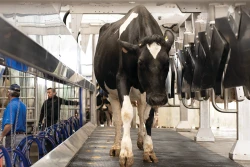
Three producers open up and share about their journey of innovation and technology as a way to spell longevity to their dairy operations.

Feeding free-choice hay with a concentrate supplement has the potential to add gain to growing calves without large investment in additional equipment.

Needle size matters when using hormones during synchronization protocols for breeding cattle.

Have you wanted to have more calves born earlier in your calving season, but didn’t want to deal with the increase in labor, cost and facilities to utilize estrus synchronization and artificial insemination?

It has been widely observed by dairy producers and nutritionists that reduced production responses – in terms of milk yield, components, or both -- are almost a given when soybean meal is swapped out for DDGS.

David Lalman, Ph.D., has researched cow size and feed efficiency with intent to help producers create a cowherd that is resilient and productive in the best environment and still productive in the worst of years.

Gen Z’s challenges aren’t just academic; they’re personal, says Jill Bramble, president and CEO of 4-H. Many young people say they are falling short, unable to envision a successful future where they feel connected to their friends, families, and communities.

Researchers explore interactive effects of guy microbiomes, fatty acids and muscle to promote better health.

The pace of expansion of the U.S. cow inventory will be slower than past cycles including the fact that beef production takes longer than other proteins.

Facilities, genetics, nutrition, stockmanship and marketing are some of the impotant factors to consider in the transition process.

Could increasing colostrum volume delivery help calves better navigate cold stress? Brazilian researcher Carla Bittar shares her insights on adjusting colostrum dosage for winter-born calves.