
Livestock Equipment Technology

From Wisconsin to New York, dairy leaders are trading clipboards for cloud-based logic, building a digital nervous system to master margins and protect a 250-year legacy.

Many calves develop pneumonia days before showing symptoms. Lung ultrasounds are helping veterinarians detect the hidden disease earlier.

With annual returns up to 500% and a massive reduction in lameness costs, discover why AI-powered computer vision is the high-ROI investment redefining modern dairy profitability.

Crowd gates are often one of the most used tools on a dairy. However, just like any tool, crowd gates can be used incorrectly and can sometimes negatively impact cow comfort and welfare.

How cows are grouped directly influences how smoothly a robotic milking system runs.

When it comes to nutrition, we certainly aren’t in Kansas anymore.

Giving heifers some practice time with an automated milking system before calving could help them adapt faster and boost milk production during the first few weeks of lactation.

In the heart of central California, Lumar Dairy stands as a dynamic example of how commitment to heritage and openness to change can coexist and thrive.

Researchers continue to seek methods of monitoring animal health and welfare to anticipate health setbacks and improve the animals’ lives. The latest tool to do so: saliva.
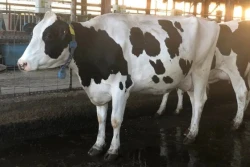
Activity and rumination monitoring systems -- precision cow monitoring -- can revolutionize the way a dairy manages its cows. Or they can pile up frustrations and create greater expense without adding value.

A new approach to automated milking is gaining traction in the industry – robotic batch-style milking.

As the dairy industry continues to change at lightning speed, Farm Journal recently surveyed producers – asking them about challenges and opportunities that face them, which six leading-edge insights surfaced.

The SENSEHUB monitoring ear tag incorporates a blinking LED light so workers can quickly and easily locate those animals and apply appropriate interventions.
Once a technology becomes a boring experience it means it has become proven, well-adopted, and easy to utilize. There are three “boring” technologies silently shaping the industry.

If you’ve flown internationally recently, you may have had a first-hand experience with facial recognition software.Now that technology has found its way to the dairy parlor.

VES-Artex has recently unveiled a new soaking system, Intelligent Soaker 2.0, which is designed to help alleviate heat stress while significantly reducing water usage on dairy farms.

Chris Szydel began working as a milker at Pagels Ponderosa nearly 30 years ago. Today, he’s the herd manager of both the Pagel Ponderosa and Hilltop Farm dairies and oversees three different parlors and 65 employees.

As a new approach to robotic milking for larger dairy operations, DeLaval has announced the launch of their new VMS™ Batch Milking system, a method advancement in robotic milking technology.

A big question on the minds of many decision makers on the dairy is: Should one invest more heavily in hiring highly skilled cow people or in adopting technology that can perform tasks that good cow people could do?

A team of Irish researchers has developed a breakthrough innovation to monitor activity and health characteristics of dairy cows – and it doesn’t involve and wires, chips, batteries, or electronics of any kind.

By using precision technologies such as automated milk feeders and pedometers combined with machine learning, dairy producers can detect illness earlier and make informed decisions about treatment.

A recent study at a northern Colorado dairy showed whether cows had to wait a long time to be milked or a little did not have much impact on their subsequent activity and resting behavior.

Developers say the automated system will reduce the amount of labor required to administer shots, thereby reducing out-of-pocket costs, while improving herd health and production outcomes in the process.