
Dairy - General

Fairlife is known for its value-added dairy products, such as ultra-filtered milk, protein shakes and lactose-free milk. Soon, the company will be producing these popular products at its upcoming facility in N.Y.

This growing beef-on-dairy health problem is costing packers two major things – time and money.

As long as the beef market is hot, the key for producers will be maintaining the right number of lactating cows going through the parlor and ensuring the right number of replacement heifers can keep that pipeline full.

The language barrier is often a challenge for dairies, as the owner and employees don’t always speak the same language. Now that barrier is extended as K’iche’ is becoming more well-known on U.S. dairy farms.

The SENSEHUB monitoring ear tag incorporates a blinking LED light so workers can quickly and easily locate those animals and apply appropriate interventions.

The goal of formulating milk replacer is to as closely as possible duplicate – and even improve upon – whole milk. A team of researchers is exploring how to do that based on fat source choices and fatty acids.

The American Association of Bovine Practitioners is making the name change, as it more accurately reflects the issue.

Kay Russo, DVM, Novonesis technical services manager for dairy and poultry, emphasized the situation is rapidly evolving and more clarity will come with time as researchers learn more.

Sid Miller, commissioner of the Texas Department of Agriculture, says the risk of highly pathogenic avian influenza impacting beef cattle in the state’s panhandle – where dairy cows have been infected – is minimal.

Ohio has become the sixth state where dairy cattle have tested positive for highly pathogenic avian influenza (HPAI), also known as bird flu.

Livestock producers and veterinarians are urged to practice good biosecurity practices to prevent transmission of the disease. Five states have also issued restrictions on dairy cattle movement.

The Idaho State Department of Agriculture announced that HPAI, known as highly pathogenic avian influenza, or bird flu, has been found in dairy cattle in Idaho.

In an effort to increase its biosecurity measures against HPAI, also known as bird flu, the Nebraska Department of Agriculture has issued a 30 day restriction on the importation of dairy cattle.

The livestock industry continues to grapple with the first confirmed cases of HPAI in cattle, while federal and state agencies continue to assure consumers there’s no concern about the safety of the U.S. milk supply.
USDA says genetic sequencing revealed the mystery illness impacting Texas dairies is the same strain of Highly Pathogenic Avian Influenza (HPAI) that’s been in the U.S. The virus is carried by wild waterfowl.

The best-quality colostrum is thick, creamy, and has a beautiful golden color, right? Not necessarily, according to Danish veterinarian and researcher Hanne Skovsgaard Pedersen.
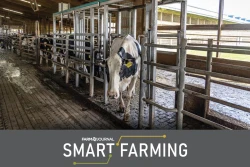
Once a technology becomes a boring experience it means it has become proven, well-adopted, and easy to utilize. There are three “boring” technologies silently shaping the industry.

According to the Centers for Disease Control and Prevention (CDC) and USDA food safety experts, properly prepared beef is safe to eat and is not a food safety risk to humans.
In affected cowherds, the illness impacts nearly 10% of the animals, causing reduced feed consumption and a 10% to 20% decline in milk production.
Numerous studies have now shown that feeding colostrum replacer to mimic transition milk has beneficial effects for preweaned calves.

If you want to stay ahead of calf health and catch sickness in its earliest stage, University of Minnesota Graduate Student Abbigail Prins offers a handy detection tip.

If you’ve flown internationally recently, you may have had a first-hand experience with facial recognition software.Now that technology has found its way to the dairy parlor.

VES-Artex has recently unveiled a new soaking system, Intelligent Soaker 2.0, which is designed to help alleviate heat stress while significantly reducing water usage on dairy farms.
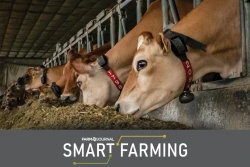
By integrating complex biosensors technology onto our farms, we are now capable of knowing more about our cows’ bodies than ever before.

Keeping cows, calves and employees comfortable during the winter months is a balancing act. However finding the right combination between keeping animals warm while also providing adequate air exchange is essential.

Feed-out of new-crop corn silage has begun on most dairies, and it appears this crop may be more prone than normal to silage collapses.

Though maternity pens can sometimes feel chaotic to manage, there are additional ways to help minimize stress and create a calmer calving environment for both cow and calf.

What does an incredible leader, filled with so much knowledge and wisdom, who has had his hand in the tremendous growth and advancement of an organization like Milk Source, teach employees?

Chris Szydel began working as a milker at Pagels Ponderosa nearly 30 years ago. Today, he’s the herd manager of both the Pagel Ponderosa and Hilltop Farm dairies and oversees three different parlors and 65 employees.

Higher prices for beef calves are incentivizing dairy producers to breed crossbred bull calves