
Animal health

Better rumen function means more available energy, helping improve cattle productivity.

The project, developed by Cooperative Extension livestock specialists and veterinarians, aims to mitigate profit, production and financial risks to cattle producers.

Multiple studies indicate there are potential connections.

USDA announced on Oct. 30 the first reported case of H5N1 in a pig in an Oregon backyard farm.

Take a deeper dive into the culling decision along with post-culling management and marketing focused on spring-calving herds.

Here are some basic rules of thumb to follow when determining the hay supplies you will need to sustain your cow herd over the next few months.

National disease prevention relies on systematic monitoring and biosecurity to protect animal health, trade, and economic resilience against outbreaks like Highly Pathogenic Avian Influenza.

The study also showed that a bovine H5N1 virus is susceptible to the antiviral drugs favipiravir and baloxavir marboxil (brand name Xofluza) of the polymerase inhibitor class, as well as the neuraminidase inhibitor zanamivir.

The award was presented during the Applied Reproductive Strategies in Beef Cattle Symposium in Athens, Georgia, earlier this month.

Pain is a natural condition for all animals and humans. But when it comes to dairy cattle specifically, the intensity and duration of their pain can have significant influence on both their welfare and productivity.
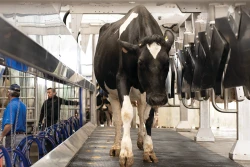
Three producers open up and share about their journey of innovation and technology as a way to spell longevity to their dairy operations.

Needle size matters when using hormones during synchronization protocols for breeding cattle.

Have you wanted to have more calves born earlier in your calving season, but didn’t want to deal with the increase in labor, cost and facilities to utilize estrus synchronization and artificial insemination?

Kennedy Cattle Company triples feedlot size to take advantage of strong cattle prices. Manages margins by growing more of its own feed.

David Lalman, Ph.D., has researched cow size and feed efficiency with intent to help producers create a cowherd that is resilient and productive in the best environment and still productive in the worst of years.

Florida, Alabama, Iowa, Ohio, Michigan and Nebraska have all made news headlines this year in regards to cultivated meat legislation.

The pace of expansion of the U.S. cow inventory will be slower than past cycles including the fact that beef production takes longer than other proteins.

Facilities, genetics, nutrition, stockmanship and marketing are some of the impotant factors to consider in the transition process.

The “Paws, Claws, Hooves, Fins, and Feet—Advancements through a One Health Approach” virtual One Health symposium is set for Nov. 19, 2024. RACE credits are available.

Texas A&M group will support the work of search and rescue dogs.

There’s a lot of hyperbole out there about USDA’s EID mandate — much of it serves as nothing more than fear-mongering.

The 2024 57th AABP Annual Conference demonstrated resiliency and preparedness of bovine veterinarians.

Understanding the reasons for and steps to provide euthanasia is important to provide a painless and stress-free death for livestock.

Maximizing pleasure and satisfaction in dairy calves isn’t required. But it does make them happier, and helps the dairy industry share a positive picture with the consuming public, according to University of Wisconsin animal behavior researcher Dr. Jennifer Van Os.

Topics covered in the 2024 event will include the cattle outlook, coccidiosis, and future trends in the Kansas cattle feeding industry.
The program offers a One Health approach to antimicrobial stewardship and combatting antimicrobial resistance. The 2024 Symposium will focus on Combatting AMR Together: Shared Commitment, Shared Success.

The decision is a key part of Canada’s response plans to control and ultimately eliminate an outbreak of FMD should it be detected in Canadian animals.

More than 50 animals, to date, including cattle and one moose have died. Officials say the current risk to humans is small.

The agency has developed an online Q&A to answer questions about veterinarians’ federal requirements with regard to these topic areas.

“Genomics 2.0 – Optimizing Dairy Cattle Fertility” headlines the Sept. 19 Dairy Calf And Heifer Association webinar.