
News

Now that the mystery illness impacting some dairy herds has been revealed as the same strain of Highly Pathogenic Avian Influenza that has been impacting the U.S. poultry flock, pork producers are asking questions.

Steve Troxle, state commissioner of agriculture, said he is waiting for more diagnostic information from the National Veterinary Services Laboratory and will work collaboratively with North Carolina dairy farmers.

The goal of formulating milk replacer is to as closely as possible duplicate – and even improve upon – whole milk. A team of researchers is exploring how to do that based on fat source choices and fatty acids.

The American Association of Bovine Practitioners is making the name change, as it more accurately reflects the issue.

The past few winters have thrown many curve balls at cattle producers. In addition to causing stress, these conditions are tough on cattle’s overall health, making deworming this spring even more important.

Liver abscesses remain a singular, dark cloud over the otherwise sunny segment of dairy-beef-cross cattle. Several entities are performing research to try to solve this frustrating industry obstacle.

NCBA and the PLC oppose three finalized Endangered Species Act rulemakings that significantly expand federal overreach and roll back reforms that previously provided some relief to farmers and ranchers.

Bacteria, viruses, and protozoa all have crafty methods of making preweaned calves sick. Veterinarian Don Sockett shares his advice on fighting these organisms through effective cleaning and sanitation routines.

Kay Russo, DVM, Novonesis technical services manager for dairy and poultry, emphasized the situation is rapidly evolving and more clarity will come with time as researchers learn more.

Keeping replacement females from first calf heifers can work if producers plan and select sires that are adequate for calving ease and also offer maternal traits that are beneficial.

Sid Miller, commissioner of the Texas Department of Agriculture, says the risk of highly pathogenic avian influenza impacting beef cattle in the state’s panhandle – where dairy cows have been infected – is minimal.

Ohio has become the sixth state where dairy cattle have tested positive for highly pathogenic avian influenza (HPAI), also known as bird flu.

Mexico will increase surveillance and reinforce inspections of U.S. livestock imports after bird flu was found in dairy cattle.

Jonathan Levine has been selected as the new dean of the University of Wisconsin–Madison School of Veterinary Medicine.

Is the U.S. pork industry prepared for a Japanese encephalitis virus outbreak? Here’s how a newly developed diagnostic test could help.

As cattle are fed to heavier end points, the incidence of BCHF is increasing. The beef industry is stepping up to help producers and veterinarians make production and selection decisions to reduce the occurrence of BCHF.

The VWP set can impact the calving interval and length of lactation. A farm’s days to first service is an excellent time to see if the VWP is being met.

Livestock producers and veterinarians are urged to practice good biosecurity practices to prevent transmission of the disease. Five states have also issued restrictions on dairy cattle movement.

The Idaho State Department of Agriculture announced that HPAI, known as highly pathogenic avian influenza, or bird flu, has been found in dairy cattle in Idaho.

The Texas Department of State Health Services reports that a human case of bird flu has been confirmed in Texas and identified in a person who had direct exposure to dairy cattle presumed to be infected with the disease.

In an effort to increase its biosecurity measures against HPAI, also known as bird flu, the Nebraska Department of Agriculture has issued a 30 day restriction on the importation of dairy cattle.

By using precision technologies such as automated milk feeders and pedometers combined with machine learning, illnesses can be detected earlier and better informed treatment decisions can be made.

The livestock industry continues to grapple with the first confirmed cases of HPAI in cattle, while federal and state agencies continue to assure consumers there’s no concern about the safety of the U.S. milk supply.
USDA says genetic sequencing revealed the mystery illness impacting Texas dairies is the same strain of Highly Pathogenic Avian Influenza (HPAI) that’s been in the U.S. The virus is carried by wild waterfowl.

Utilizing credentialed veterinary technicians (CVTs) in bovine practice can assist veterinarians in providing additional and efficient services to their large animal clients.

A new resource developed by the National Cattlemen’s Beef Association and CattleFax helps cattle producers maximize profitability from their culling decisions.

The best-quality colostrum is thick, creamy, and has a beautiful golden color, right? Not necessarily, according to Danish veterinarian and researcher Hanne Skovsgaard Pedersen.

Preventive practices are recommended for feedyards to reduce the stress and performance loss that comes from muddy lot conditions.
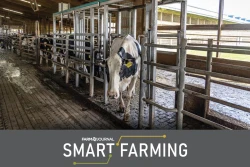
Once a technology becomes a boring experience it means it has become proven, well-adopted, and easy to utilize. There are three “boring” technologies silently shaping the industry.

According to the Centers for Disease Control and Prevention (CDC) and USDA food safety experts, properly prepared beef is safe to eat and is not a food safety risk to humans.