

This is a developing story that we are continuing to follow and will update when more information is available.
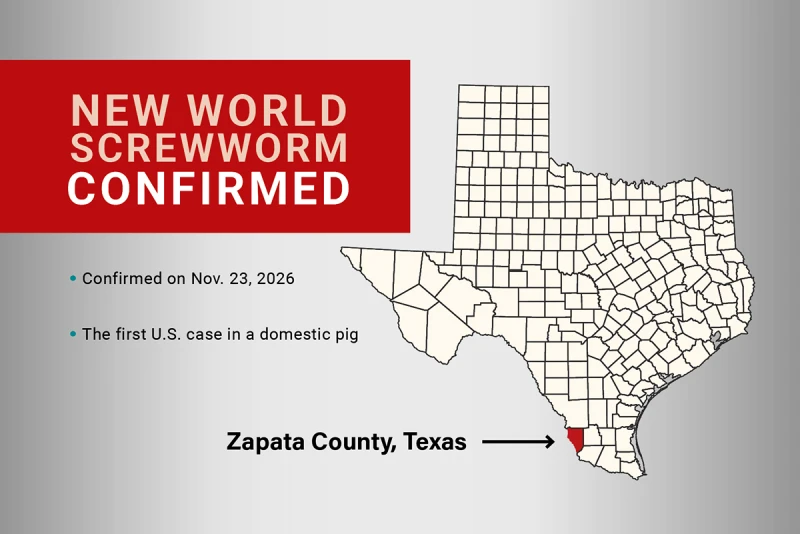
The first case of New World screwworm (NWS) in a domestic pig in the U.S. was confirmed on Nov. 23 in Zapata County, Texas. Located along the Rio Grande in South Texas, Zapata County is far removed from the state’s commercial swine production centers.
“The infestation was found in a castration wound, and the animal is being categorized as an exhibition or show animal,” says Dr. TR Lansford, Texas Assistant State Veterinarian and Texas Animal Health Commission (TAHC) Deputy Executive Director.
Unlike viral or bacterial threats, NWS is not an infectious, contagious disease, explains Dr. Dusty Oedekoven, chief veterinarian for the National Pork Board.
“The fly lays eggs in wounds of warm-blooded animals, and the larvae cause myiasis,” Oedekoven explains. “It isn’t transmitted directly from animal to animal. FDA has conditionally approved some products and authorized others for emergency use against NWS, so treatment options are available. The risk should be taken seriously, but there’s no need to panic.”
The first domestic case of NWS in decades was detected on June 3 in a young calf in La Pryor, Texas.
“For us to have our first pig months later is pretty remarkable,” says Colby Ferguson, executive director of the Texas Pork Producers Association (TPPA). “It shows that we’ve done a really good job of prevention and taking care of our animals. We don’t have pigs out on pasture and rangeland like cattle, sheep and goats, so their exposure is very different. It’s important to remember this is a very preventable pest.”
Rapid Response Underway in Zapata County
TAHC personnel, in coordination with the USDA, launched immediate epidemiological investigations and containment measures. Response teams have established an infested zone and are conducting active and passive animal surveillance (notably animal inspections), supporting animal movement requirements by conducting animal movement inspections, and issuing Treatment/Movement Certificates. In addition, TAHC is working with USDA partners for fly surveillance and sterile fly releases and engaging in producer education, outreach and awareness activities, Lansford says.
For producers and youth exhibitors within the 20-mile infested zone, Ferguson cautions that regulations must be strictly followed.
“You can’t just keep going through life like normal,” Ferguson says. “If you’re going to leave the infested zone with a pig to go to a jackpot show, you’re required to have a veterinarian inspect and treat that animal. Even if there’s nothing visibly wrong with the pig, it must be treated, and that certificate is only good for 14 days.”
Commercial Herds Protected by Distance and Winter Weather
While South Texas is characterized by large ranches and niche show pig operations, the state’s commercial swine industry remains insulated hundreds of miles to the north.
“Ninety-two percent of all pigs in Texas are raised in the top five counties of the Panhandle,” Ferguson points out. “Our commercial herd is about as far away from this problem as it could possibly be, which is a great thing.”
Seasonal weather provides an additional natural barrier. Screwworm pupae cannot survive in soil temperatures below 55°F or extended air temperatures below 40°F, he says.
“Winter is our friend, particularly in the Panhandle commercial corridor,” Ferguson says. “With freezing temperatures already settling into the Panhandle, natural movement of the fly into that region is not likely to happen.”
Prevention and Wound Management: Keep “Eyeballs on Animals”
Because the screwworm fly cannot lay eggs without a broken skin barrier, routine wound care is the herd’s primary defense. TAHC and veterinary leaders urge animal owners to treat wounds promptly, use approved preventatives and report any suspicious lesions.
“NWS is a highly preventable and treatable pest,” Lansford emphasizes. “Preventing wounds, treating and covering existing wounds, and using appropriate preventative therapies are key ways to protect animals from infestation.”
For show pig producers, Ferguson highlights products such as Dectomax (doramectin), which serve multiple management purposes during winter housing.
“Dectomax is a dewormer that also controls mites and mange, while serving as an effective preventative against screwworm,” Ferguson notes. “The best thing to do is consult your veterinarian. If you’re unsure what product to use or when to apply it, call your vet. If your regular practitioner is unavailable, reach out to your state veterinarian’s office.”
The Feral Swine Factor
Feral swine populations across Texas present an ongoing surveillance priority. Wildlife Services (USDA-APHIS) and Texas Parks and Wildlife Department (TPWD) continue active field monitoring for infested wild animals.
“All animal owners, hunters and outdoorsmen should check animals as often as possible for infested wounds and report suspicions to TAHC, TPWD or their veterinarian immediately,” Lansford says.
Fortunately, extensive feral swine eradication efforts in the Panhandle provide an added layer of biosecurity for commercial operations.
“Feral swine are predominantly concentrated in South, Central and East Texas,” Ferguson explains. “In the Panhandle, Dallam County has already eradicated feral swine, and the neighboring county is currently working with Wildlife Services on eradication. Removing that vector is vital for biosecurity against both domestic diseases and foreign animal disease threats.”
Key Guidance for U.S. Producers
Oedekoven emphasizes three core operational priorities for pork producers nationwide:
- Watch for Warning Signs: Monitor herds closely for restlessness, head shaking, lethargy, or animals off feed. Inspect non-healing wounds, looking for visible larvae or a characteristic foul odor associated with decaying tissue. As Texas animal health officials note: “The best thing we can put on our animals right now is our eyeballs.”
- Double Down on Fly Control: Standard sanitation, organic matter removal and prompt premises maintenance eliminate favorable breeding environments. Suppressing farm fly populations acts as a direct biosecurity shield against myiasis. Fly control ensures you are not creating environments favorable to fly habitation.
- Inspect Before You Move: The most important thing people can do right now is to be observant of their animals. Always inspect stock thoroughly before shipping or hauling.
Read More:


