
For many producers and veterinarians, it’s time to line up PG and ultrasound appointments to establish a pregnancy rate and sort off open cows. It can be a nerve-wracking day until it’s over — and even then ranchers may not be entirely satisfied with the outcome.
So, what can ranchers do if they aren’t satisfied with their herd’s pregnancy rates?
It’s beneficial to look at both an industry average and a herd average in these instances.
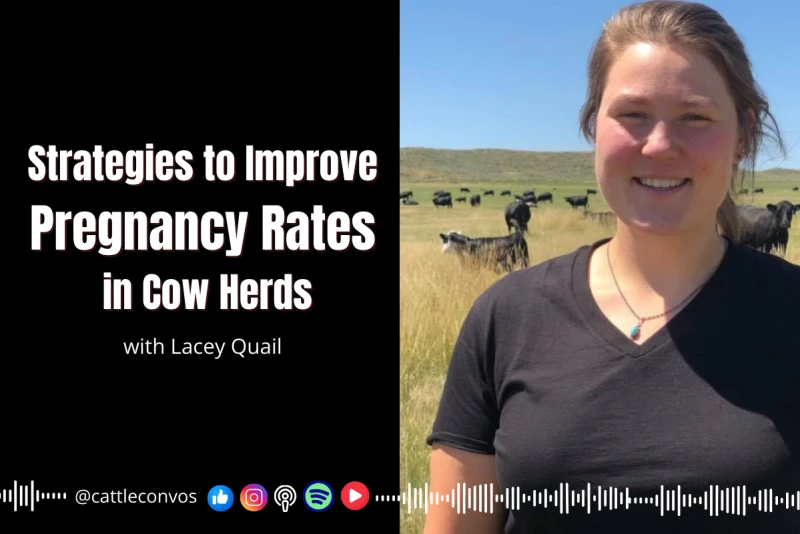
“If you have a 60 to 80 day breeding season and are over 90% for pregnancy rate, you are doing pretty well, according to previous North Dakota surveys,” says Lacey Quail, North Dakota State University extension livestock management specialist. “If you have a shorter breeding season, you can expect that percentage to be a little lower.”
Next, take a look at your herd records from previous years.
“If you get your PG or ultrasound results and aren’t happy, it implies you have previous records to compare it to,” Quail says. “We need to keep herd records so we can dig out something that might go under the radar and potentially cause profit loss.”
Fertility is multifactorial, which can sometimes make it challenging to pinpoint one specific cause.
She recommends producers start by asking themselves a series of questions to start narrowing down what may have caused lower pregnancy rates and where the problem occurred.
Several management questions producers can ask themselves to start to tease out the potential cause of lower pregnancy rates are:
- Did you see cows cycling?
- Did you see bulls mounting and breeding?
- Did you see breeding activity at the beginning or end of the season?
- Were the majority of open cows in one pasture or management group?
- Are some of the open cows thinner than the rest of the group?
- Were the majority of open cows of a certain age?
- Did you experience a heat spell or other potential stressor?
Quail says, “Fertility is like a domino train. You are waiting for the last domino to fall, but the train may have fallen off track a long time ago in a different room.”
Once you answer the above questions, be mindful of the following missed opportunities.
“On the bull side, make sure you are having full breeding soundness exams completed by a veterinarian and take into account social hierarchy when putting together breeding groups,” Quail says.
After that, it’s important to remember breeding activity.
“A big missed opportunity is not taking the time to observe breeding behavior in your herd,” Quail says. “We want to evaluate if cows are cycling, and if bulls have the libido to seek, mount and breed. Noticing issues early can save a great deal of loss.”
Don’t just stop at noting activity in general. When did the activity happen?
“Take a closer look at when cows are getting pregnant, and not just if they are getting pregnant,” Quail says. “This can have a big impact on overall productivity and profitability.”
Nutrition also can’t be overlooked.
She says, “In many cases, cows calving early might reach peak lactation and breeding season before growing forages can support all their nutrient requirements. Keeping females in adequate body condition going into and out of the breeding season is going to go a long way toward overall pregnancy rate.”
Environmental stressors can’t entirely be avoided, but they can be mitigated.
“Another missed opportunity is fine tuning environments to reduce stress,” Quail says. “We can’t control the heat, but we can control to some degree how far cows and bulls have to walk to access water.”
Ranchers shouldn’t feel like they have to go through this process alone. They can reach out to specialists, veterinarians and their nutritionists for help.
“Consulting with a veterinarian regardless of your pregnancy rate is a good thing to do,” Quail says. “Some records to be aware of and share with your vet are differences in pregnancy rate and calving rate as well as any co-mingling with neighboring cattle.”
May your pregnancy rates be favorable this fall. But if not, remember to start with herd records and basic questions to help get to the cause.
You can listen to the full conversation on the Casual Cattle Conversations podcast.


