
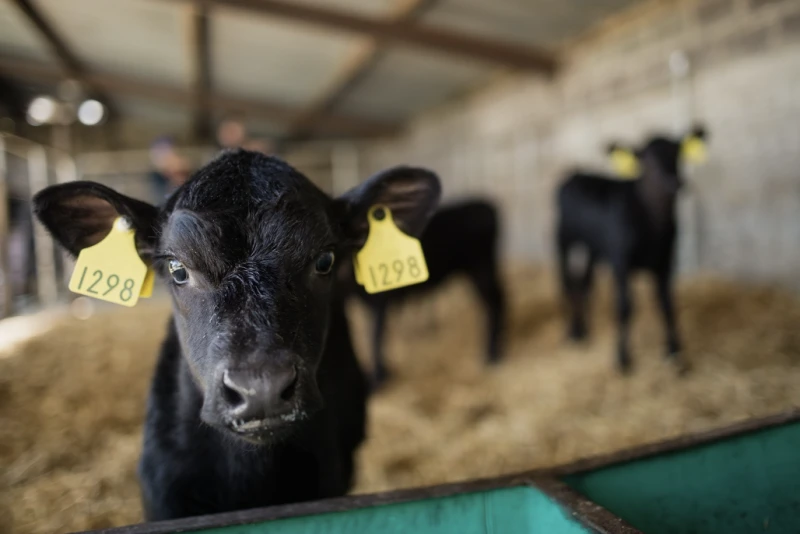
A scouring calf may initially respond to oral electrolytes and supportive care. However, if it continues to weaken, stops finishing milk and develops a poor suckle, it may need more aggressive treatment.
Recognizing when a calf is deteriorating can help producers act before the situation becomes critical. In some cases, that means moving to intravenous (IV) fluid therapy under a veterinarian-established protocol.
Recognize When a Scouring Calf Needs More Help
In one scenario, Dr. Rachel Budd, veterinarian with Metzger Vet, describes a calf that has received oral electrolytes for several days but is becoming increasingly dull and weak.
Three clinical signs point to severe dehydration:
- Sunken eyes: The eyes are recessed approximately 2 to 4 mm into the orbit.
- Slow skin tent: Skin remains tented for five to six seconds after being pinched.
- Weak suckle: The calf has a very weak suckle reflex.
A calf showing these signs is in serious trouble and needs IV fluid therapy, Budd says. Producers should contact their veterinarian and follow the farm’s treatment and escalation protocol rather than continuing to wait for oral treatment to work.
“This is probably one of my favorite things for people to be able to learn on farm, especially because this is often a case where we will get called too late,” Budd says. “Oftentimes people will sit on this calf for a little bit because they think, ‘Oh, if I do just a little bit more, maybe it will respond.’”
Prepare for IV Fluid Therapy
Producers interested in keeping IV supplies on farm should work with their veterinarian to choose an approach, establish a protocol and train employees before an emergency occurs.
Budd describes two options: placing an IV catheter connected to a fluid bag, or using a calcium hose, lactated Ringer’s (LR) solution and a needle.
The catheter-and-bag approach takes more equipment and practice, but it provides better control over the rate of fluid administration and allows larger volumes to be delivered. Budd recommends using a five-liter fluid bag for these cases.
The needle-and-hose method requires less equipment and can be useful for farms that do not regularly treat calves with IV fluids. However, the needle is less secure than a properly placed catheter, and someone must remain beside the calf throughout the treatment.
Using an IV Catheter and Fluid Bag
For calves that need larger volumes of fluid, Budd recommends learning to place an IV catheter to connect to a fluid bag.
Supplies to have on hand:
- IV catheter
- Five-liter fluid bag and IV administration line
- Alcohol spray
- Super glue
- Vet Wrap
Steps for placing the catheter and starting fluids:
- Locate the jugular vein. Dehydration can make the vein difficult to find. If the calf is down, elevate its hindquarters on bags of shavings or a bale to help bring blood toward the head. Spraying alcohol over the jugular groove can also make the vein easier to see. Clipping the area is another option.
- Place and secure the catheter. The catheter has a metal needle surrounded by a plastic component. Once blood appears in the catheter hub, hold the unit steady and advance the plastic component into the vein. Slowly remove the metal needle, leaving the plastic catheter in place. Use a few dabs of super glue to secure the catheter. Budd notes that veterinarians may use suture, but super glue is often more accessible for on-farm use.
- Connect and prime the fluid line. Connect the IV line to the fluid bag using clean technique. Run fluid through the entire line before attaching it to the catheter. This removes air from the tubing and helps prevent air from entering the vein.
- Secure the tubing. Route the IV line along the side of the neck and around the ear to prevent ear movement from pulling on the catheter. Use a few dabs of super glue to hold the line in place, then secure the tubing around the neck with vet wrap.
- Start the fluids and monitor the calf. Hang the fluid bag higher than the catheter site so gravity can move fluid into the vein. Budd says to target approximately two to three drops per second. Halter the calf and keep it in a separate pen where it can be monitored.
Budd encourages producers to practice catheter placement before they need the skill in an emergency and to make sure all equipment is kept clean.
“It’s okay if for the first couple of times you go through a few catheters, there’s nothing wrong with that. It takes practice,” she says. “You want to make sure, because remember, we’re putting this stuff into the calf’s vein. We want to keep it super clean.”
Using a Calcium Hose, LR Bottle and Needle
For farms that do not routinely administer IV fluids to calves, a calcium hose and needle can provide another option with less equipment.
The setup uses a bottle of LR solution, a calcium administration hose and an 18-gauge, 1.5-inch needle. The process is similar to administering IV calcium to a cow, although the calf’s jugular vein is smaller.
Steps for administering fluids:
- Locate the jugular vein. Hold off the vein as you would when placing a catheter.
- Insert the needle. Use the 18-gauge needle and insert it into the vein until blood appears.
- Prime the line. Run fluid from the LR bottle through the hose to remove air.
- Connect the hose. Attach the fluid line to the needle and allow the fluid to enter the vein.
This method requires close attention to the rate of administration. The needle is less secure than a properly placed catheter, making this approach better suited to smaller fluid volumes.
“You need to sit there beside the calf the whole time,” Budd asserts.
Fluid rates and volumes should be established with the herd veterinarian for the individual calf and situation. Producers should not assume the same rate or volume is appropriate for every case.
Make a Plan Before the Next Scouring Calf
Dehydrated calves can receive treatment faster when the equipment and trained personnel are already available.
“If you are able to bring IV fluids in house, those calves are gonna get treated faster and they’re going to respond more effectively,” Budd says.
Work with your veterinarian to decide which setup fits the farm, identify the supplies to keep available and establish clear instructions for when to escalate from oral to IV fluids. Practice the procedure with veterinary guidance so employees know how to prepare the equipment, monitor the calf and recognize when additional help is needed.


