
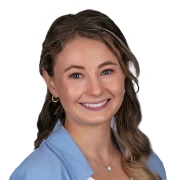

Bethany Dado-Senn once couldn’t imagine herself coming back to the family dairy. After years of researching calf health and advising farms as a consultant, Dado-Senn now starts her mornings in the calf barn at her family’s Four Hands Dairy near Amery, Wisconsin. She’s caring for calves, learning more about the rest of the operation and sharing what she knows about dairy science and farm life on social media.
Working with other dairies made her realize how much she couldn’t see from a consultant’s perspective. She wanted to be part of more than just the calf program and understand how the entire farm worked together.
“I think the more time I spent working with other farms, the more I realized how much I missed being part of my own. There was something about being home, being involved in the day-to-day work and helping shape the future of our family’s farm that kept pulling me back,” she says.
From Consulting to the Whole Operation
While working as a calf consultant at Vita Plus, Dado-Senn divided her time among farm visits, training and professional development. On farms, she helped troubleshoot challenges involving nutrition and management. Often, she says, the work centered less on nutrition than on the daily systems around calf care.
“Nine times out of 10, it was more management related,” she says. “It was sanitation, or, you know, maternity hygiene or colostrum protocols and that sort of thing.”
She also enjoyed leading workshops, where she could share what she knew about calf care and hear from farmers about what they were seeing on their own farms. Public speaking became one of her favorite parts of the job.
“Leading workshops was a real firelighter for me. I really enjoy public speaking, and conferences and other learning opportunities gave me new information to bring back to the farms I worked with,” Dado-Senn says.
The job suited her, but consulting also meant she usually saw just one piece of a dairy’s operation. While working for Vita Plus, Dado-Senn had continued feeding calves at her family’s farm. The more time she spent there, the more she wanted to understand how the rest of the dairy ran and how decisions made in other areas affected the work she knew best.
“When you aid in a portion of the farm system, you only see that portion, and you don’t have any control over what’s happening with the other 98% of the operation,” she says. “I wanted to see what was going on in the other 98%.”
Returning gave her the chance to do more than recommend changes. She could try them, follow the results and see how decisions elsewhere on the farm affected the calf program.
“When you’re in a consulting role, you go on and you provide suggestions,” she says. “Nine times out of the 10, I didn’t know if what I was suggesting was making a difference or if it was being acted upon. Now I get to think about ideas, think about solutions to problems, and actually institute them and see if they’re helpful.”

A Plan Years in the Making
The idea of coming home developed over a couple of years. Dado-Senn and her parents talked through what her role might look like, including the farm’s size, scope and future management needs. Her parents had returned to the farm themselves in 2000, when Dado-Senn was in first grade, and she appreciated the openness they brought to planning her own return.
“We very clearly communicated, like, okay, we’re all agreeing Bethany wants to come back. What does that look like?” she says.
The family had transition-planning meetings and discussed expectations before she made the move. When an employee left, a position opened up. The final steps happened faster than Dado-Senn expected, but followed months of discussion.
“The actual process of making the transition was way faster than I thought it was,” she says. “But it was preempted by many, many, many months of conversation.”
The decision also changed the shape of family life. Dado-Senn had been on the road about three days a week, often for roughly 13 hours, and estimates she drove around 30,000 miles a year. The farm keeps her close to home, even though the workday remains full.
“I’ve been home for dinner every single night,” she says. “It’s so nice to hear about their days and be there for bath time and bedtime. Those are the little things you miss when you’re on the road so much.”
Traveling between farms often meant long hours in the truck, with much of her day spent driving or sitting in meetings rather than being physically active. Returning to the farm has given Dado-Senn more opportunities to move throughout the day and spend time outdoors.
“I just feel really good,” she says. “Moving my body so much more and being outside has been really, really nice.”

Coming Back as a Learner
Growing up on the farm didn’t mean Dado-Senn knew every part of its operation when she came home. She had spent eight years away, first in school and then in her career. Now she’s learning routines from the people who have worked there for years, taking notes and asking questions as she goes.
“I’m not better than anyone else because my last name is on the farm sign,” she says. “I’m coming here really wanting to learn.”
Her father has given her regular tasks as she gets her footing, with responsibilities such as dairy records and finances coming gradually. The arrangement lets her learn how the family currently manages the operation before taking on more.
Some lessons come with a little more horsepower than others. Operating a skid steer was one of the skills Dado-Senn had to pick up as she took on more of the day-to-day work on the farm.
“I was really nervous to learn how to drive a skid steer. I like dealing with calves, not equipment,” she says. “But I can already tell I’m a lot more confident when I get into the cab. The only way through was through.”
She brings the same willingness to learn to the rest of the job. When she doesn’t know how a task is done, she says so and asks someone to walk her through it. She’s also willing to laugh at the things she hasn’t mastered yet, confident she’ll improve with time.
“I’m not afraid to ask questions or admit when I don’t know how to do something,” she says. “I’m learning something new every day, and I know I’m going to get better at it.”
Bringing Science to Social Media
Dado-Senn’s online work began in graduate school, when she started casually posting about science. She wanted to make research accessible to farmers and people outside agriculture, connecting studies with the practical choices made on dairies.
“We, as dairy farmers, have a job that’s practical and hands-on, but we also have a strong scientific foundation to help guide what we do every day,” she says. “How many industries can say that? We get to take the science and put it to work on the farm.”
During her years with Vita Plus, Dado-Senn’s social media posts became more focused on calf care. When she returned to the farm, she wanted to keep sharing what she knew while showing people what she was learning firsthand.
She continued posting written updates, photos and videos, using her own farm as a way to connect research with everyday dairy work. Over time, that effort grew into her online identity as Dr. Dairy Farmer, where she shares practical information about calf care, farm life and the science behind dairy production.
“I’m basically dairy’s parenting account,” she laughs, sharing her take on the everyday questions and challenges that come with raising calves.
Animal care can spark strong opinions online, especially when farmers have different ways of doing things. Dado-Senn says a post about one approach can quickly turn into a discussion about what works on other farms. Her science background helps her explain the research behind her advice and stick with what the evidence supports.
“When I put videos together, I can go back to the research and use my science background to explain what I’m sharing,” she says. “I can be confident in what I’m saying because I know there’s science behind it.”
Keeping up with social media takes planning. Dado-Senn batches four or five videos at a time, often on weekends, and spreads her posts throughout the week, from calf case studies to science and herd management topics.
She’s careful not to let content creation distract her from farm work.
“My goal is to not have social media take away from my focus while I’m on the farm,” she says, citing safety and respect for her team.
For now, she calls it “a time-consuming hobby,” though she hopes it could eventually lead to speaking or consulting opportunities and bring in extra income for the dairy. Still, social media is just one part of her life on the farm, not the reason she came home.
Starting with Calf Health
With fresh eyes and a science background, Dado-Senn is looking for ways to improve the calf program without changing everything at once. She has identified three areas to focus on: sanitation, efficiency and data. She’s starting with sanitation, looking for changes she can test herself before bringing them to the rest of the team.
“I’m a big believer that calf health is the largest driver of performance overall,” she says. “A healthy calf will grow better and likely perform better in the herd.”
She hopes to use an ATP meter, which measures organic residue left on surfaces after cleaning, along with bacterial cultures to evaluate whether changes are making a difference. She also wants any new practices to be workable for the people who will carry them out.
“I want this to be something that I can implement, test out, see if it is helpful before I bring it to our team and say, ‘Okay, we’re going to do this,’” she says. “I also don’t want to be making them every single month.”
The dairy milks about 500 registered Holsteins and has about 800 total cows and roughly 1,100 livestockDado-Senn cares for 60 to 70 calves on milk at a time and follows heifers until about five or six months of age.
Her return has also helped the family adjust when unexpected things happen. When her mother broke her ankle, Dado-Senn stepped in to manage the calves while her mother recovered. She had been back long enough to learn the daily routines, making the transition easier for everyone.
“I think God has really funny timing because I’m back,” she says. “I’d been back just long enough that taking over all the calf management responsibilities for the interim has been a pretty seamless transition.”
Choosing a Life that Fits
Dado-Senn is frank about the financial side of returning. Her parents shared information about the farm’s finances as they planned, and she says she would not have come back if the operation were not on solid footing.
“If the farm wasn’t in a good financial position, I wouldn’t come back,” she says. “There was a certain amount of security in having a well-paying corporate job. You know what your paycheck is going to be, and there’s comfort in that. Coming back to the farm meant giving up some of that security, so I needed to know the farm was in a position where I could make it work.”
Her advice to others considering a career change is to think about the life they want and the people who rely on them, rather than letting other people’s expectations make the decision.
“There are so many different paths you can take and still feel fulfilled and successful,” she says. “You have to look at your options and ask yourself what kind of life you want to live, rather than worrying about what anyone else thinks or what your path looks like.”
For Dado-Senn, coming home has brought together her interest in science with the hands-on work of running a dairy. She’s still making calf-care videos, but now she’s also testing ideas in her own calf program, learning new jobs and seeing how each part of the farm connects.
Her path back to the farm has also reinforced what she hopes others in dairy will discover for themselves: There isn’t one right way to build a fulfilling career in agriculture.
“I get to be creative, solve problems and stay connected to my community in ways I couldn’t in any other role. For me, that means being on the farm, where I can put my knowledge to work, keep learning and be part of the bigger picture,” she says. “I want everyone in our industry to find a path where they can use their strengths and feel fulfilled by the work they do.”


